…Using Mindfulness and Yoga to Survive Caregiving
When my mom was diagnosed with Frontotemporal Degeneration (FTD), I was in my late twenties. I was building my own family, teaching yoga, building and business, and trying to understand what was happening to a woman who had always been such an important part of my life.
FTD is a difficult disease because there is no simple roadmap. There were constant changes, unexpected turns, and the question that seemed to follow us everywhere: What happens next? I often describe my mom’s illness as a longest ripping off of a Band-Aid. Rather than fast and relatively painless it was long, and excrusiating with opportunity to feel every small inch as it tears off.
My dad was her full-time caregiver, and I have always believed that being the spouse and full-time caregiver is one the hardest job of all. My sisters and I did all that we could to support him, and even though it created additional helpful measures on the caregiving journey, it never took away the hardship of full-time caregiving.
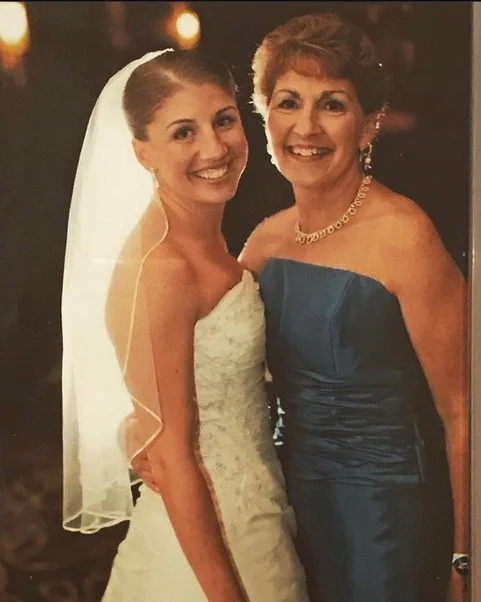
In the midst of this caregiving journey, I was a yoga teacher. I knew the tools. I knew about breathing, mindfulness, meditation, and movement. But caregiving taught me something I don't think I could have learned from teaching yoga alone: knowing the tools and actually being able to use them when life is overwhelming are two very different things.
Yoga could not change what was happening to my mom. What it gave me was a way to work with what was happening inside of me.
MAKING SPACE
Eventually, my personal experience with caregiving began to merge with my professional work. Through the Association for Frontotemporal Degeneration (AFTD), I connected with other caregivers and began sharing yoga and mindfulness practices with the FTD community.
I quickly realized that caregivers don't necessarily need another 60 or 90 minute commitment on their calendar. Time is often the very thing they don't have.
So I started thinking about yoga differently. Instead of asking, How can I get a caregiver onto a yoga mat? I began asking, What can a caregiver use right now, in the middle of a difficult day?
That question became the foundation of my self-care toolbox.
One of the simplest tools istaking note.
Stop for a moment and ask yourself: What is happening in my body right now?
Is my jaw clenched? Am I holding my breath? Are my shoulders lifted? Are my fists tight? Are my feet on the floor?
You don't have to fix anything. Just notice.
That tiny act of awareness can create a little space between what is happening and how you respond.
I think of yoga as creating the space between the action and the reaction.
Thirty Seconds Can Matter
Try this with me.
Close your eyes for a moment and bring to mind one of the most difficult or frustrating moments you've experienced in caregiving. Don't try to change it. Just notice it.
What happens in your body?
Is your jaw tight? Are your shoulders lifted? Are your hands clenched? Is your breath shallow? What words would you use to describe how you feel?
Now take a breath and let that image go.
Close your eyes again and bring to mind a favorite place. It can be anywhere—a beach, a favorite chair, a quiet trail, your childhood home, or simply somewhere you feel safe.
Notice the details. What do you hear? What is the temperature? What do you see? What does the air feel like?
Take another breath.
Now notice how different your body feels.
Maybe your shoulders have dropped. Maybe your breath has slowed. Maybe you feel a little lighter, or maybe you simply feel different.
The situation didn't change. Your caregiving responsibilities are still there. The diagnosis hasn't changed. But in just thirty seconds, your internal experience shifted.
That is one of the most important things mindfulness has taught me.
We can't always change the situation, but we can sometimes create a little space around it.
Maybe that space is one breath.
Maybe it is dropping your shoulders.
Maybe it is unclenching your fists.
Maybe it is stepping outside for five minutes while your loved one is safe.
It doesn't have to be elaborate to matter.
Sometimes a glimmer of space is enough to help us take the next step
Feel the Feelings
Caregiving also taught me that mindfulness isn't about being calm all the time.
There were days when I felt grief, anger, sadness, frustration, fear, and guilt. Sometimes several of those emotions showed up at once. You can love someone deeply and still need a break. You can be grateful for the time you have together and still feel angry about what is happening. You can be having a good day while someone you love is very sick.
Those things can coexist.
One practice I developed in my caregiving toolbox is labeling the emotion. Pause and say, This is sadness. This is anger. This is fear. Then notice whether there is somewhere in your body that you can soften.
The goal isn't to make the feeling disappear. It is to create enough space to experience it without becoming completely consumed by it.
Small Tools for Real Life
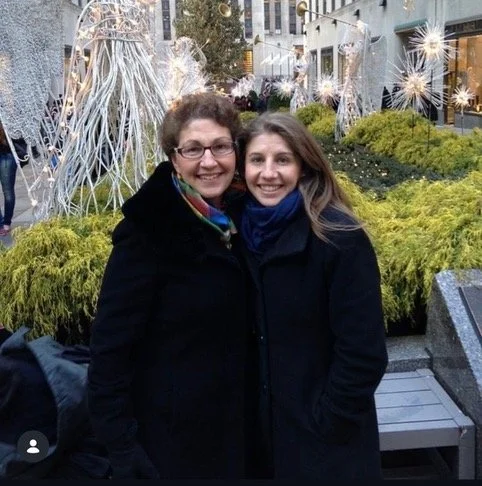
My toolbox grew to include breathing practices, meditation, Mountain Pose, Tree Pose, Lion's Breath, the lemon squeeze, loving-kindness meditation, walking, fresh air, and simply connecting with other people.
The lemon squeeze is one of my favorites because it is so simple. Imagine you're holding a lemon in your fist. Inhale and squeeze your fist tightly. Then exhale and release it. Sometimes physically feeling the difference between tension and release is enough to help your body let go of a little stress.
And sometimes yoga is simply standing in Mountain Pose, feeling your feet on the ground, and taking a few breaths. A full yoga practice can take time, but caregivers can use individual poses throughout the day when an entire class isn't possible.
I also learned that my toolbox needed to include other people.
Community became one of my greatest sources of support. Finding people who understood even a small part of what I was experiencing allowed me to say, Okay. I'm not alone.
Sometimes self-care is not something you do by yourself.
Sometimes self-care is calling someone who understands.
Taking Care of the Caregiver
Perhaps the hardest lesson for me was learning that taking care of myself was not selfish.
For years, I had a hard time saying no. I wanted to help. I wanted to be there for everyone. Eventually, I realized I had done a lot. I could step back. I could still care and still contribute, but I could allow someone else to step into the fold.
That was a turning point.
My mom passed away in November 2019, but grief didn't simply end when she died. Sometimes a song comes on, or I'm driving and the light hits a certain way, and suddenly I'm right back there.
So I continue to practice.
I breathe. I notice. I walk. I connect. I allow myself to feel what I'm feeling.
Yoga didn't get me off the caregiving roller coaster. It helped me build a toolbox for the ride.
And if there is one thing I would want another caregiver to know, it is this:
You don't need an hour. You don't need a perfect practice. Start with thirty seconds.
Notice your body.
Take a breath.
Unclench your jaw.
Feel the feelings.
Create a little space.
And then take the next step.
Sometimes that is what surviving caregiving looks like—not fixing the impossible, but finding small, meaningful ways to take good care of yourself while you're living through it.
Corey’s other publications include: “What If Its Not Alzheimer’s 4th Edition”- Chapter 24 Holistic Practices and the Self-Care Toolbox”
You can listen to more on her journey on RM Anne: Season 1 Episode 13
Additionally you can listen to more about her journey with caregiving and mindfulness on the Yoga Magic Podcast: Episode 222 https://podcasts.apple.com/us/podcast/yoga-magic/id1489885189?i=1000629477118